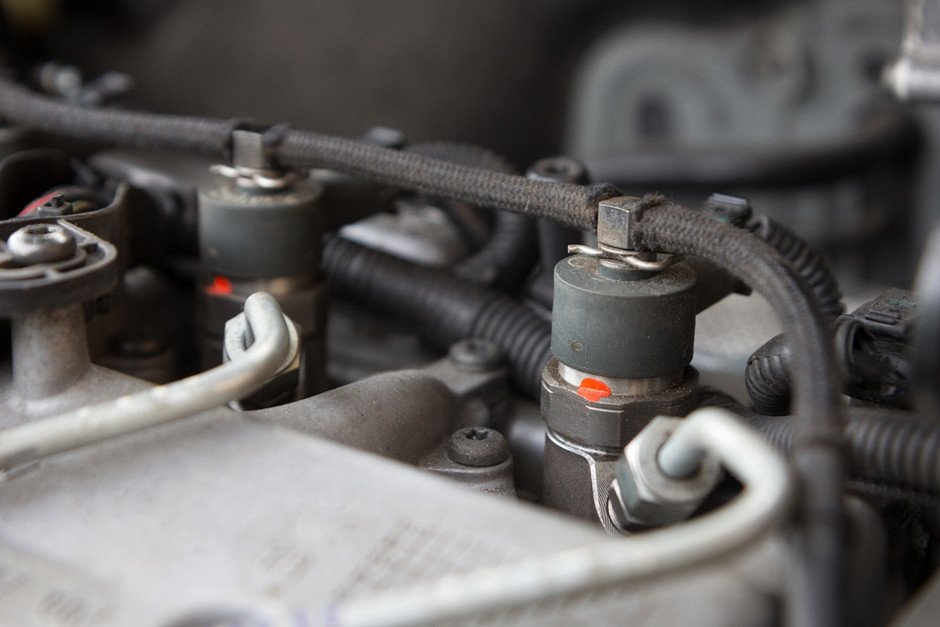
With multiple injections during a single combustion cycle, sub-micron tolerances and operating pressures upwards of 2,000 bar, today’s common rail injectors are having to work a lot harder, making them more susceptible to wear and tear. Leading remanufacturer, Carwood, explains why and what to look out for.
Why do common rail injectors fail? whilst modern systems are built to last, they’re vulnerable to issues such as:
- Particle contamination: particles, often invisible to the naked eye, can pass through the filtration system and erode components like the control valve and nozzle assembly. This affects the injector’s ability to correctly meter the correct amount of fuel, and in turn, the timing and distribution of fuel into the engine cylinder.
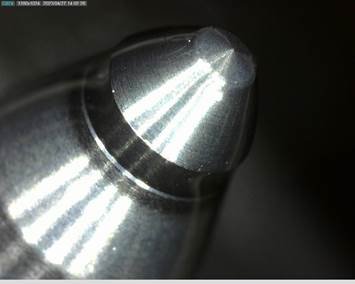
particles on nozzle needle under microscope
- Water contamination: excess water in fuel can corrode metal surfaces, block filters and reduce the fuel’s lubricating properties, shortening the life of key components. It can also encourage the growth of diesel bug, which attacks the fuel, and causes further component damage.
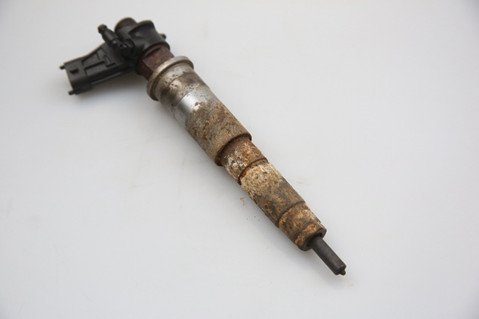
a heavily corroded injector
- Heat soak: fuel left in the injector after engine shut down, will be ‘baked’ onto it by the residual heat. Over time, these deposits can build up and clog the fuel injectors, disturbing both the quantity and timing of injection.
- Poor installation: problems such as incorrect torque or missing or incorrectly seated sealing rings, can also cause unnecessary wear.
- Solenoid failure: a short circuit from a faulty ECU, damaged wiring loom or water ingress can damage the solenoid. Piezo crystals are also extremely sensitive to vibration and therefore any mishandling or damage can cause issues.
- Engine blow-by: a vehicle’s PVC system would normally pull any blow-by out. However, if this is not functioning correctly, and/or the filter doesn’t capture it, then the fuel and oil residue may end up clogging the injectors too.
- Broken or leaking fuel injector: on rare occasions the nozzle and/or capnut can crack or break. Engine heat can also make the o-rings brittle and crack, which then causes the injector to leak, hampering delivery of the fuel-air mixture to the engine.
- Faulty ECU: if there’s a problem with the vehicle’s ECU, then it may not be able to tell the fuel injectors how to properly mix and deliver the air and fuel to the combustion chamber. Whilst this is not directly attributable to the injector, it can cause similar issues. On some applications the injector drive circuit inside the ECU can fail and cause a short to ground, therefore damaging the injector solenoid.
Signs of a faulty common rail injector: fortunately, a failing fuel injector will almost certainly impact the vehicle’s drivability, emissions and/or fuel economy. So, spot any of these, and it’s a good indication that there’s an issue, which will need to be investigated further:
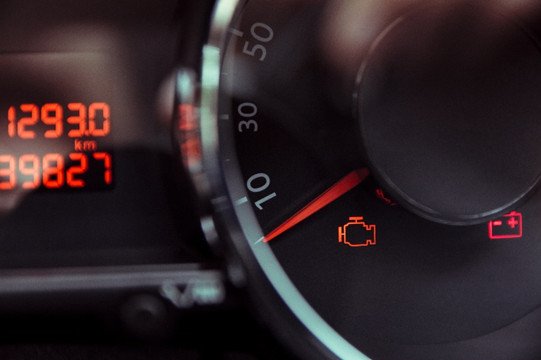
- Check engine light: a fault in any one of the injectors or fuel system, can trigger the engine management light to come on – plug in a scan tool to confirm the diagnostic code.
- Engine knock: an audible knocking sound from the engine bay, indicates that the timing of the combustion process is off, causing premature detonations.
- Rough running: if the vehicle is not getting enough, or an uneven supply of fuel, the RPM while idling will drop, resulting in rough idle – noticeable as a deeper engine sound, engine chugging or even vehicle vibration, which will worsen over time. If the RPM gets too low, the car may stall.
- Engine misfire: similarly, if the engine is not getting enough fuel, then the cylinders may not be able to provide sufficient power, causing it to misfire, and/or sluggish acceleration.
- Engine surge: in contrast, a faulty injector may also supply too much fuel causing the engine to surge and slow acceleration – in this instance the engine revs will continuously change under constant load.
- A fuel leak: physical damage to the injector will likely result in a leak – a quick visual check will reveal fuel on either the injector or the fuel rail. Over time, there may be a hardened black substance near the injectors.
- Smell: you may also notice a diesel smell. As well as a leak, this can happen if the injector is stuck open or the fuel is not getting burnt fully. A microbial infestation may also give off a rotten egg smell.
- Poor fuel economy: if the engine is not getting the right amount for fuel for combustion, then the ECU will step in and supply more – this causes the engine to run rich, wasting unnecessary fuel
- Exhaust Smoke: a bad injector can also cause an uneven or incomplete fuel burn, resulting in increased emissions and visible exhaust smoke. Drivers will notice either black or white smoke, depending on the injector failure mode, as the unburnt fuel exits the exhaust. The increase in emissions may cause an MOT failure.

Check back next week for part two!