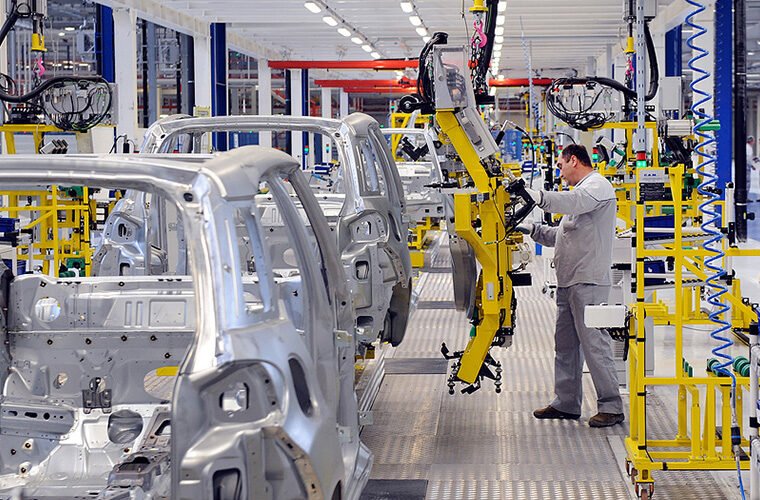
The transition to electric vehicles (EVs) was seen as a way to revitalise the British car industry, promising to create a net-zero economy, improve air quality, and relaunch a major employment sector. However, recent developments suggest the industry is facing significant challenges.
Luxury car manufacturer Lotus, owned by Chinese company Geely, has announced it will cut as many as 550 jobs at its UK factory due to “current market conditions.” The company, which produces the Emira sports car and the Evija electric hypercar, appears to be scaling back in the face of tariffs and quotas in the US market. The news follows a similar announcement from Jaguar Land Rover, which is cutting 500 UK jobs as it prepares for a new electric model.
The challenges are not isolated. Vauxhall has closed its van plant in Luton, and the Society of Motor Manufacturers and Traders (SMMT) reported that total British vehicle production has fallen to levels last seen in 1953, excluding the Covid shutdown. The report indicated a 70% fall in production over the first six months of this year.
This downturn raises questions about the future of the British car industry in a rapidly changing global market. The loss of jobs and skills from companies like Lotus and Jaguar Land Rover, coupled with falling production figures, signals a contraction in a sector that was once a pillar of the UK economy.
Source: Telegraph