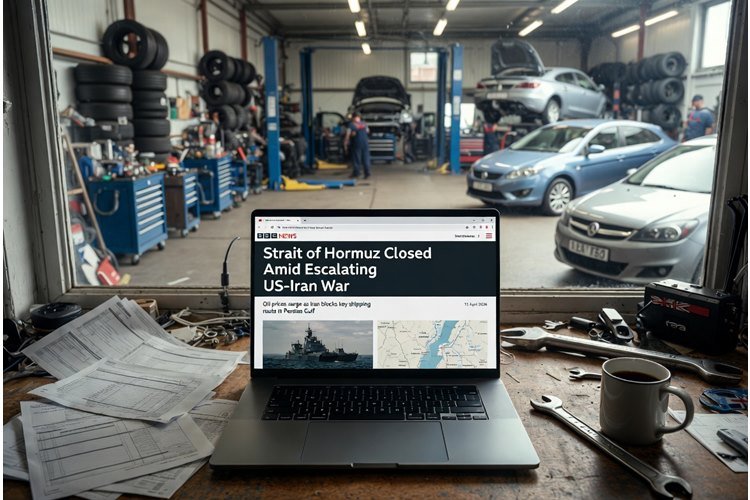
The start of hostilities in the Middle East this February has sent shockwaves far beyond the political arena, with some of those landing squarely on the desks of UK independent garage owners.
With the closure of the Strait of Hormuz, we are witnessing a global energy and supply disruption that surpasses the 1973 oil embargo. For the local workshop, this isn’t just news—it’s a direct hit to the cost of parts, heating, and maybe even customer confidence.
The energy squeeze from pump prices and premises
The most immediate impact is the “cost-push” of inflation at the pump. With Brent crude often hitting $120 per barrel, diesel prices have jumped by 20% in just three weeks. For you, this can mean emergency fuel surcharges on parts.
Additionally, the spike in wholesale gas and heating oil is a major blow to overheads. In rural areas where many of you rely on kerosene to keep the workshop warm, heating bills have more than doubled. It’s a perfect storm that requires a sharp eye on your hourly labour rates to ensure your margins don’t suddenly evaporate.
Supply chain pressures from helium to aluminium
The conflict has exposed how much we rely on the Middle East for high-tech repairs. Qatar produces nearly 33% of the world’s helium, a gas essential for manufacturing the semiconductors found in every ECU and ADAS sensor you fit. We’re staring down the barrel of a chip famine similar to 2021, meaning longer lead times and higher prices for electronic components – the longer the disruption goes on, the worse this will get.
Raw materials are also under pressure. Aluminium prices have spiked by 8%, driven by the energy-intensive nature of smelting. Expect the cost of radiators, water pumps, and body panels to rise by up to 10% throughout the remainder of 2026.
Shifting motorist behaviour
As the cost of living bites once more, motorists are feeling the ‘brutal inflation surge’. While some are continuing to defer maintenance, others are keeping their cars longer – as we all know, the vehicle parc is the oldest it’s ever been in the UK. But this is your opportunity.
The ageing UK fleet is now the primary revenue driver, and independent garages are the ‘value alternative’ for drivers who can no longer justify franchise dealer prices.
Interestingly, convenience is now trumping price for many. Drivers are looking for local, trusted experts who can help them save money in the long run. By reframing a routine service as a ‘fuel-saving measure’—reminding customers that old filters and oil can increase consumption—you can keep your bays full despite the economic gloom.
Staying resilient in 2026
Success this year will be about agility. The launch of the SERMI scheme on 1 April is a landmark win, finally giving you access to secure manufacturer repair information. While the certification costs come at a tight time, it ensures you aren’t locked out of modern, high-tech work.
To navigate the months ahead, have a think about the following:
- Promote proactive maintenance: Focus on fuel efficiency benefits to capture price-sensitive drivers.
- Watch your rates: Use tools like the IGA Labour Rate Calculator to stay sustainable as wages and NICs rise.
- Inventory management: Move toward a “just-in-case” model for critical sensors you regularly replace, along with common service items, to avoid supply delays.
The longer the war and the disruption continue, the worse the effects. Even if the Strait were opened tomorrow, repairs to Iranian and Qatari LNG plants will take years, so expect higher fuel prices and parts shortages to be the ‘new normal’ for the foreseeable future.